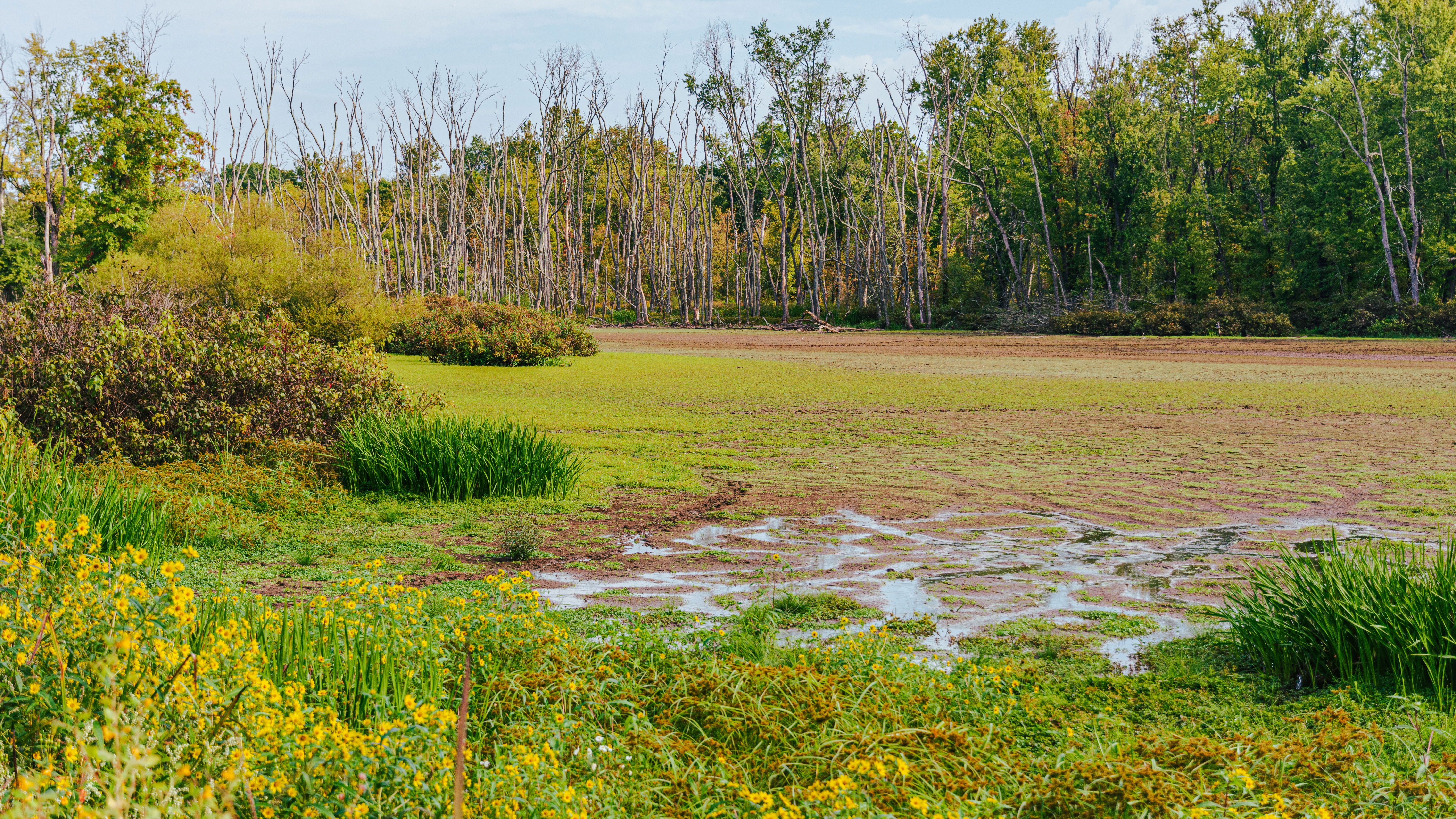
Filed Notes: NJ’s Great Swamp
The Great Swamp in Morris County, New Jersey, sits within a 55 square-mile natural basin — and it almost became an airport.
Formed by a melting glacier about 25,000 years ago, this land was shaped by time, use, and near loss. What remains today is not accidental, but rather the result of both natural forces and deliberate human decisions.
Voice of the Land
Long before it became a protected refuge, the Great Swamp was part of glacial Lake Passaic — a landscape left behind as the ice receded. For thousands of years, Indigenous peoples, including the Lenape, lived on this land, hunting, fishing, and moving through it as part of a larger rhythm.
During the Revolutionary War, the terrain served a purpose, offering cover and passage to Continental troops. But the Great Swamp’s most defining moment came in the mid-twentieth century, when development in wetlands was often viewed as opportunity rather than consequence.
In the late 1950s, the land was slated to become a major jetport — a transformation that would have erased its ecological richness and history. What followed was a powerful and sustained citizen-led effort that successfully stopped the project.
In 1964, New Jersey’s Great Swamp became a National Wildlife Refuge, and shortly after, part of it was designated as one of the first Wilderness Areas within the Department of the Interior — a quiet but significant distinction.
Living System
Birds and wildlife continue to move through this fragile ecosystem. Water follows paths it has carved over time — sustaining the land as it always has.
Lens Unfiltered
This is the same lens that shapes my work — where animals are not simply subjects, but part of a larger system of behavior, balance, and interaction in our shared world.
Even today, many developed areas, including major infrastructure, were once wetlands. The difference is not the land itself, but the choices made about it.
A Note on the Great Swamp
The Great Swamp is often spoken of as one place, but it exists in two connected parts.
The Great Swamp National Wildlife Refuge — approximately 12 square miles — is federally protected and managed by the U.S. Fish and Wildlife Service.
Surrounding it is the broader watershed, supported in part by organizations such as the Great Swamp Watershed Association, which works across local townships to protect water quality, habitat, and the long-term health of the region.
This shared responsibility reflects protection at both the national and local level.
The Great Swamp National Wildlife Refuge is home to hundreds of species and remains one of New Jersey’s most significant preserved ecosystems.