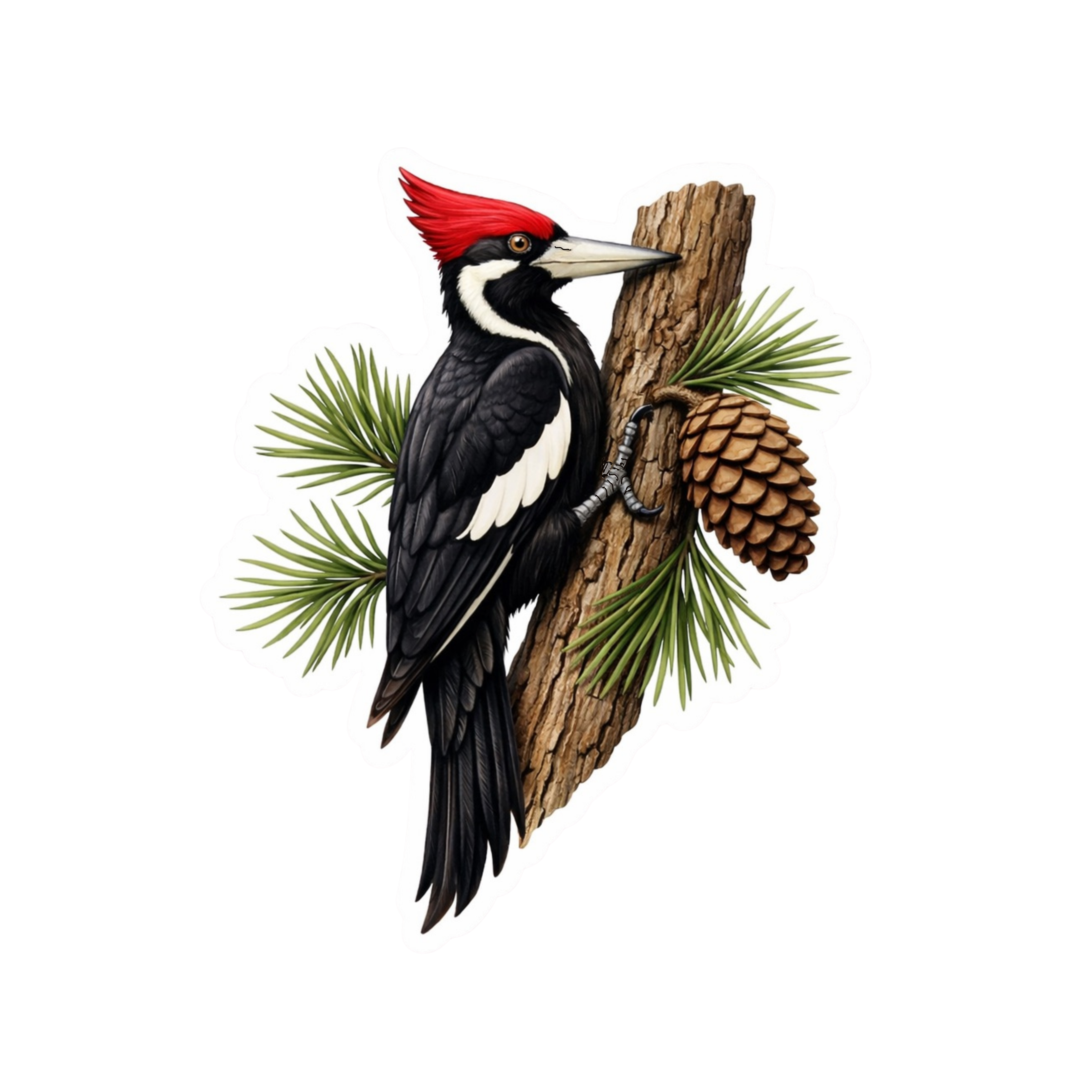
Field Note: Ghost Bird
About eight years ago, my husband came in from the woods behind our home and said that he saw a “HUGE woodpecker…really, enormous!” He was absolutely flabbergasted. He insisted, “I have never seen any bird like this in my life. Enormous!”
Me, thinking no way could it be an ivory-billed woodpecker, started asking questions. “Well, just how big?” Using my hands, I demonstrated a bird larger than the pileated woodpecker. My husband nodded eagerly. I continued, “What color was the beak - was it white or black?” An affirmative, “Yes, white!”
The ivory-billed woodpecker is widely considered extinct; a ghost bird. Yet, it remains a story that people want to believe — myself included. It helps to remember that there are places that remain just wild enough to resist full explanation. Pockets of woods where trees are allowed to decay offer sustenance for woodpeckers and a host of other species.
In northeastern New York lies the six-million-acre Adirondack Park — the largest park in the continental USA; and the largest National Historic Landmark in America. While typically a bit cold for ivory-billed woodpeckers, my husband’s sighting occurred in the spring. These birds, if they remain, would be capable of traveling in search of food. Who knows?
Not a declaration; the illustration is an acknowledgment of rarity, of uncertainty, and of the possibility that just maybe, disappearance from human view is not always absolute.
Not everything rare is gone — yet. However, it depends on what we choose to leave standing.